Vultures
Cry MachoVultures have a brief but consequential presence in the novel: one is first recalled as a remarkable bird on the road, then reappears near Mike’s truck and carries away Macho. The encounter turns a failed attempt at conversation into a shared crisis. It also places the natural world’s indifferent force beside the human violence Mike has seen staged as entertainment, while prompting Rafo to consider the difference between killing an animal and allowing it to suffer.
First Sighting and Conversation
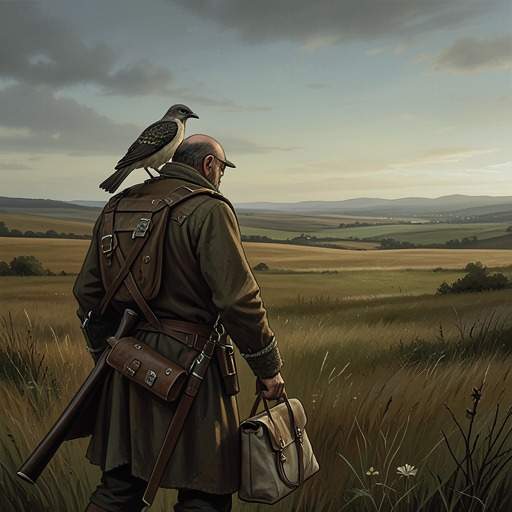
On the journey with Rafo, Mike asks whether the boy saw a vulture they had passed. He describes it as enormous, the largest he had ever seen. The question is a small, deliberate effort to engage Rafo, who shows only a glimmer of interest and asks what a vulture is. Mike checks whether he missed seeing the bird, but the exchange does not develop into an easy conversation. The animal briefly gives Mike a subject to offer; Rafo’s limited response makes clear how little that opening can accomplish by itself.
The bird returns later, near the truck, as Mike and Rafo start down a slope. It hangs almost motionless in the air, its wings held by the remaining wind. The men hear a noise and stop before Mike identifies it. Rafo throws a stone, then another. The bird rises slightly after the first, but neither attempt drives it away for long. Its persistence changes the vulture from a passing sight into an immediate presence close to the pair and their temporary shelter.
Macho Is Taken
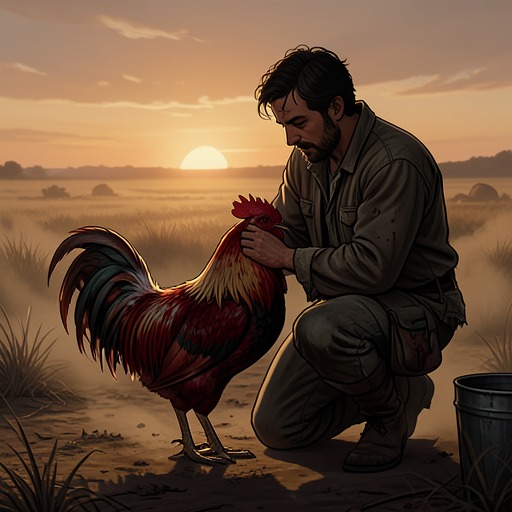
Rafo turns toward the truck and sees Macho at the open rear doorway. The rooster flutters down, and the vulture swoops toward him. Macho is tied by one leg, so when the bird pulls, the rope holds him in place. Rafo runs toward the truck, repeatedly calling out to Macho, but cannot prevent the vulture from pulling free with the injured bird. The vulture then rises with Macho in its grasp and flies into the open sky as Rafo runs along the ledge after them.
The sequence makes the vulture’s conduct consequential without giving it a motive beyond the observable attack. It does not respond to Rafo’s stones as a human threat might; nor can his cries alter what is happening. The rope that had kept Macho close to Rafo instead prevents the rooster from escaping. After the vulture takes him away, the loss is not merely an interruption to the journey: Macho had been Rafo’s companion, and Rafo’s pursuit shows his immediate attachment and helplessness.
Rafo’s Response and the Meaning of the Encounter
Later, while eating with Mike, Rafo becomes still and asks why the vulture did not kill Macho at once. Mike admits that he does not know. Rafo then says that animals should be killed quickly if they are to be killed at all. The remark is an attempt to make sense of what he has witnessed, but it also states a moral limit: the manner of an animal’s death matters to him, not only the fact that death occurs. Mike recognizes the memory as terrible for the boy, while Rafo’s words suggest that he is trying to understand its implications in his own terms.
The episode gains force from the novel’s earlier attention to animal fighting and the language of toughness. At a cockfight, Mike sees spectators praise a rooster’s valor and hears the word macho applied to such fighting. He recoils from the cruelty celebrated under that name and thinks of arenas as places built around cruelty. The vulture scene is not another human contest, and the bird is not presented as sharing the spectators’ ideas or intentions. Yet its capture of Macho brings animal vulnerability back into view after the arena’s spectacle has made suffering part of a public display. The contrast lies in the different circumstances: people praise violence as performance, while the vulture’s attack becomes a loss that Rafo cannot turn into a game or a victory.
Narrative Significance
The vulture’s two appearances give the journey a recurring image with a changed weight. At first it is something Mike asks Rafo to notice, a possible point of contact between them. On its return, the bird’s presence interrupts that tentative human exchange and takes away the creature Rafo has cared for. The bird’s flight ends the immediate action, but not the encounter’s effect: Rafo carries the question of why Macho was not killed quickly into the meal afterward.
For Mike, the episode also sits against his history in arenas, where being celebrated as a hero meant taking part in contests that depended on danger and animal suffering. The novel does not equate the vulture’s predation with that organized cruelty. Instead, the juxtaposition sharpens the difference between an animal’s action and a human culture that gives violence a name, an audience, and a place in which to be applauded. Through Rafo’s question, the scene settles on a practical expression of care: when suffering cannot be prevented, it should not be prolonged.